
Bioretention & Rain Garden
Installation
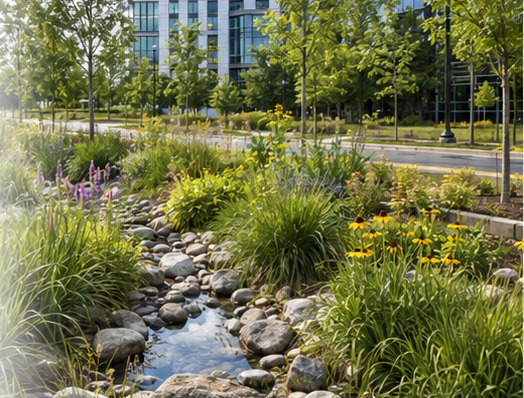
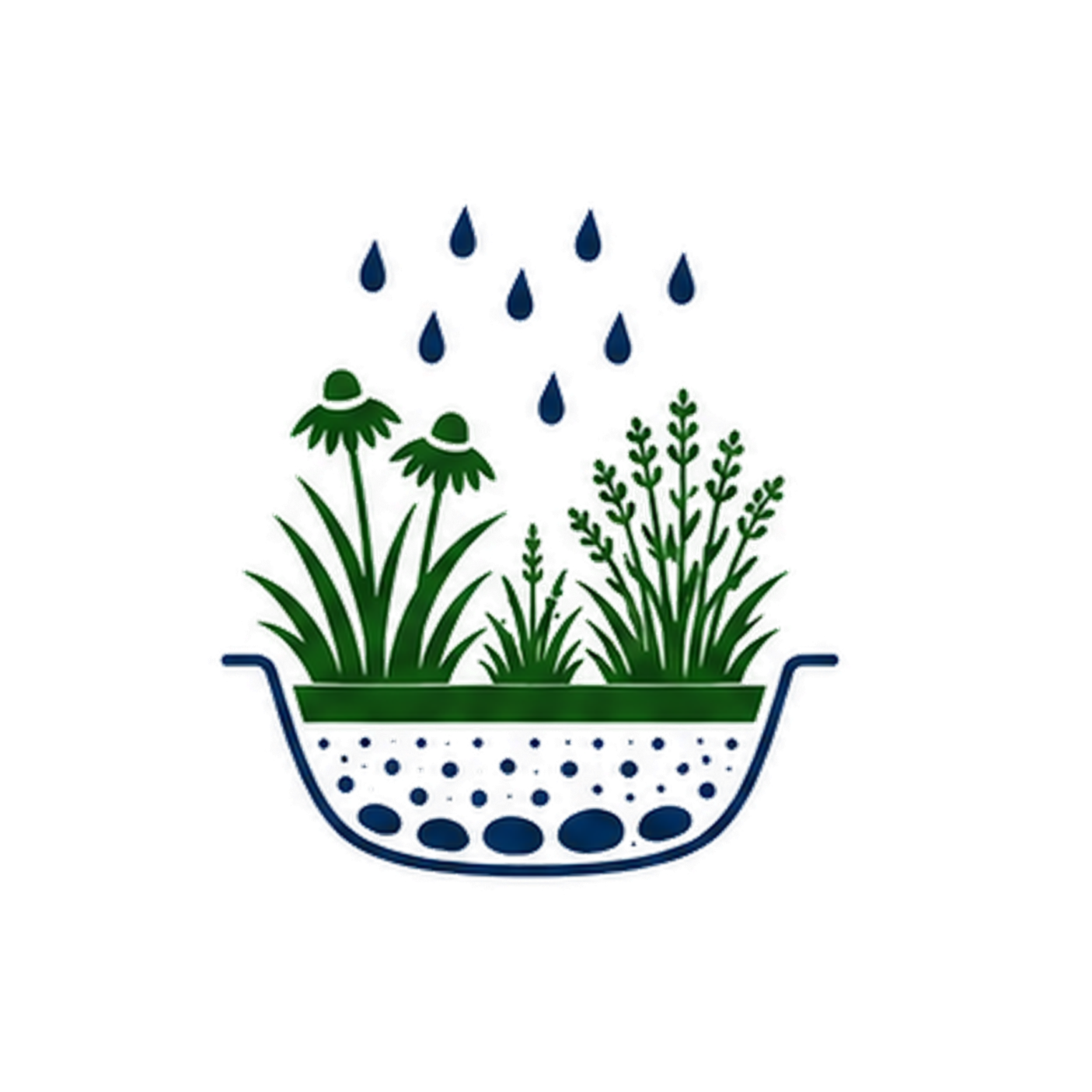
Bioretention cells and rain gardens are among the most widely specified stormwater best management practices for residential and commercial development across Northern Virginia. These systems use engineered soil media, native vegetation, underdrains, and overflow structures to filter stormwater runoff, reduce peak flow volumes and improve water quality entering local waterways and the Chesapeake Bay watershed.
When properly installed and maintained, bioretention systems deliver measurable pollutant removal, long-term hydrologic performance, and lasting value for owners, developers and the communities they serve.
Capital Stormwater Services installs and maintains bioretention cells and rain gardens to approved civil plans, Virginia DEQ design standards, and local stormwater authority requirements. Our crews are experienced in soil media placement, underdrain installation, overflow structure setting and vegetation establishment - the critical elements that determine long-term system performance. Every installation is completed to specification and every maintenance visit is thoroughly documented, giving owners, engineers and local authorities the documentation they need to verify performance, maintain compliance and support ongoing system management.
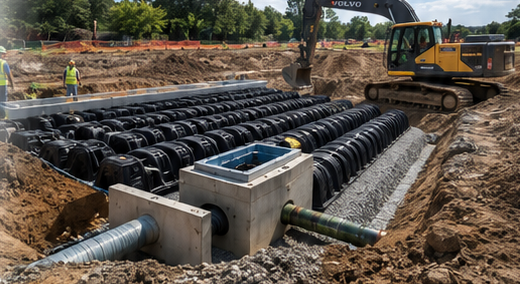
Capital Stormwater Services manages underground detention system installation from initial plan review through final closeout documentation. We install large-diameter HDPE pipe systems, chamber systems, inlet and outlet structures and associated components for commercial, residential and public projects across Northern Virginia bringing the specialized knowledge, trained crew, and in-house equipment needed to keep installations on schedule.
Our process begins with a thorough review of PE-stamped civil plans, coordination with the site general contractor and verification of subgrade, aggregate and geotextile requirements. Our crews self-perform all critical work - excavation, bedding, structure installation, pipe connections, aggregate placement, backfill, and compaction - in strict accordance with project specifications. No critical work is subcontracted, which means fewer handoffs, fewer delays, and greater accountability at every phase.
From proper bedding and geotextile placement to compaction sequencing and final backfill, our installation practices are designed to protect system integrity and ensure long-term performance under load. At project completion, we provide as-built measurements and photo documentation for owner, engineer, and county records supporting permit closeout, regulatory compliance and long-term maintenance planning.
Stormwater Infrastructure You Can Count On. Installed with Precision. Built to Last.
Underground stormwater detention has become a core requirement of modern development in across Northern Virginia.
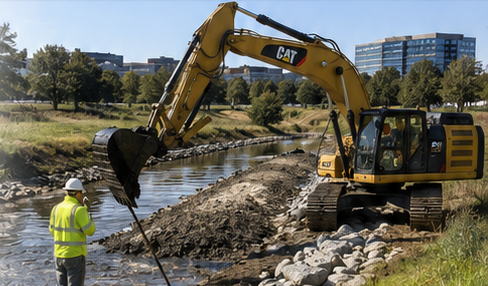
As communities grow and impervious surfaces expand, managing stormwater on-site becomes both a regulatory obligation and an engineering challenge. Underground detention systems provide the below-grade storage capacity needed to control peak flow rates, reduce downstream flooding and support water quality goals without sacrificing valuable surface space for parking, green space or future development.
In Northern Virginia's dense and fast-growing corridor, these systems are a cornerstone of compliant site design. Virginia DEQ standards, local stormwater ordinances and Chesapeake Bay watershed requirements all demand that new and redeveloped sites manage runoff effectively. Where surface area is limited and land values are high, underground detention is often the most practical and efficient solution available.
WHY UNDERGROUND DETENTION
Captures and stores stormwater runoff below grade, out of sight and off the surface
Releases stored runoff at a controlled, pre-approved rate to reduce peak flows
Reduces flooding, erosion, and downstream impacts on adjacent properties and infrastructure
Supports compliance with local stormwater ordinances and Virginia DEQ regulations
Preserves valuable surface area for parking, green space, and development
Requires scheduled inspection, maintenance, and reporting to sustain long-term performance
UNDERGROUND DETENTION SYSTEM WE INSTALL
We install underground detention systems to project specifications and local stormwater requirements. Done right and on schedule.
Installation Standards
All bioretention and rain garden installations are performed to PE-stamped plan specifications and engineered to site-specific conditions, in full compliance with local VSMP requirements, municipal ordinances, and Virginia DEQ design standards.
Existing subgrade excavated to plan depth and dimensions; subsoil scarified to promote infiltration where required
Perimeter and base geotextile fabric installed to prevent migration of native soils into engineered media
Underdrain pipe installed at plan grade with perforations, bedding and cleanout access per plan details
Engineered soil media placed and graded in lifts to specified depth. Media is specified by the engineer of record and sourced to specification to optimize filtration, infiltration, and long-term biological performance
Overflow structure installed and set to plan elevation to manage design storm events and protect system integrity during high-flow conditions
Inlet and energy dissipation features installed to prevent erosion and protect media during inflow events
Native vegetation planted to approved planting plan to support filtration performance, root structure development and system establishment
Final grades verified and documented. As-built measurements and photo documentation provided for owner, engineer and local authority records
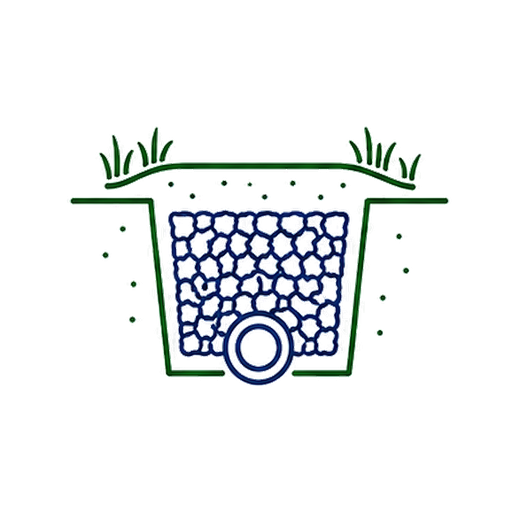
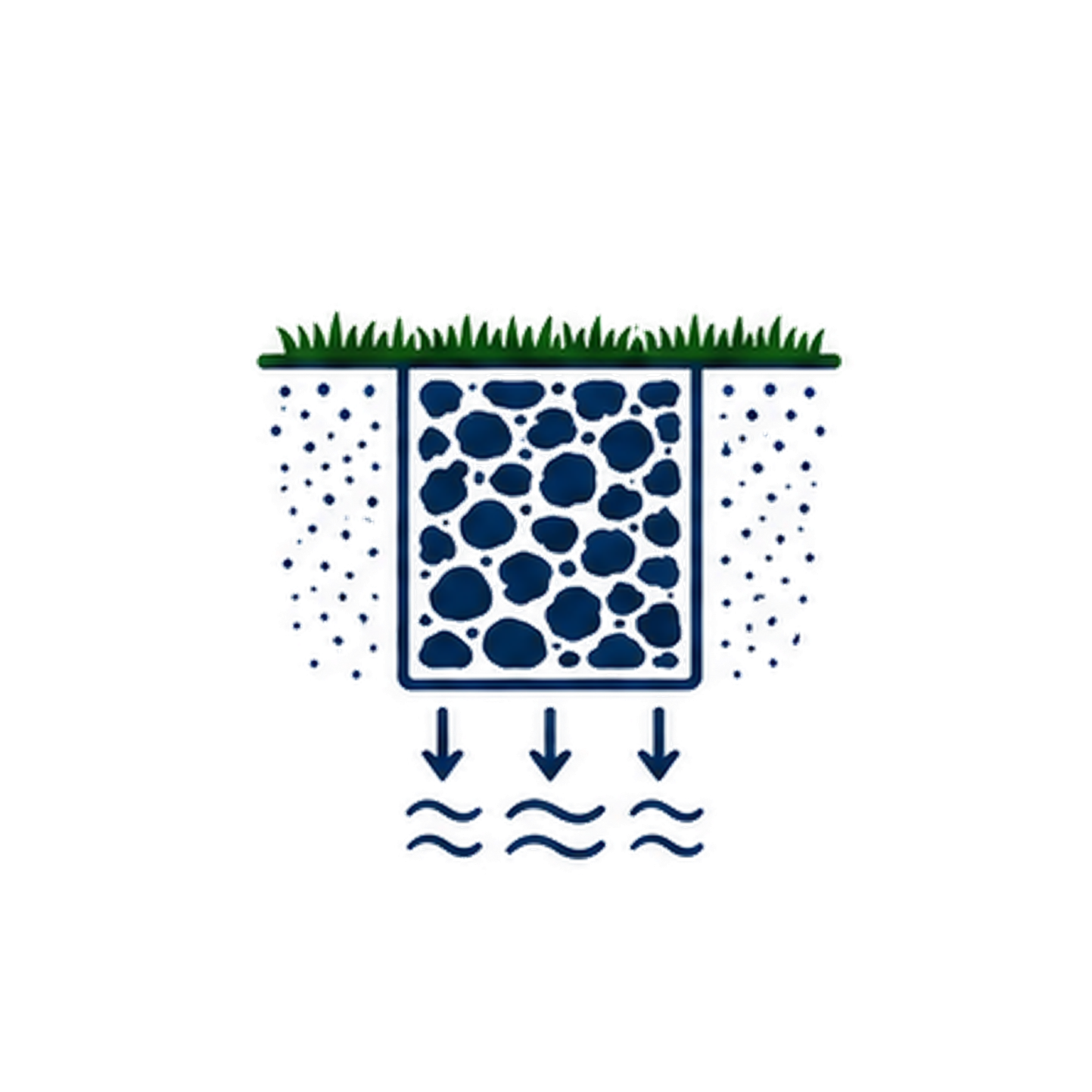
Infiltration Trenches
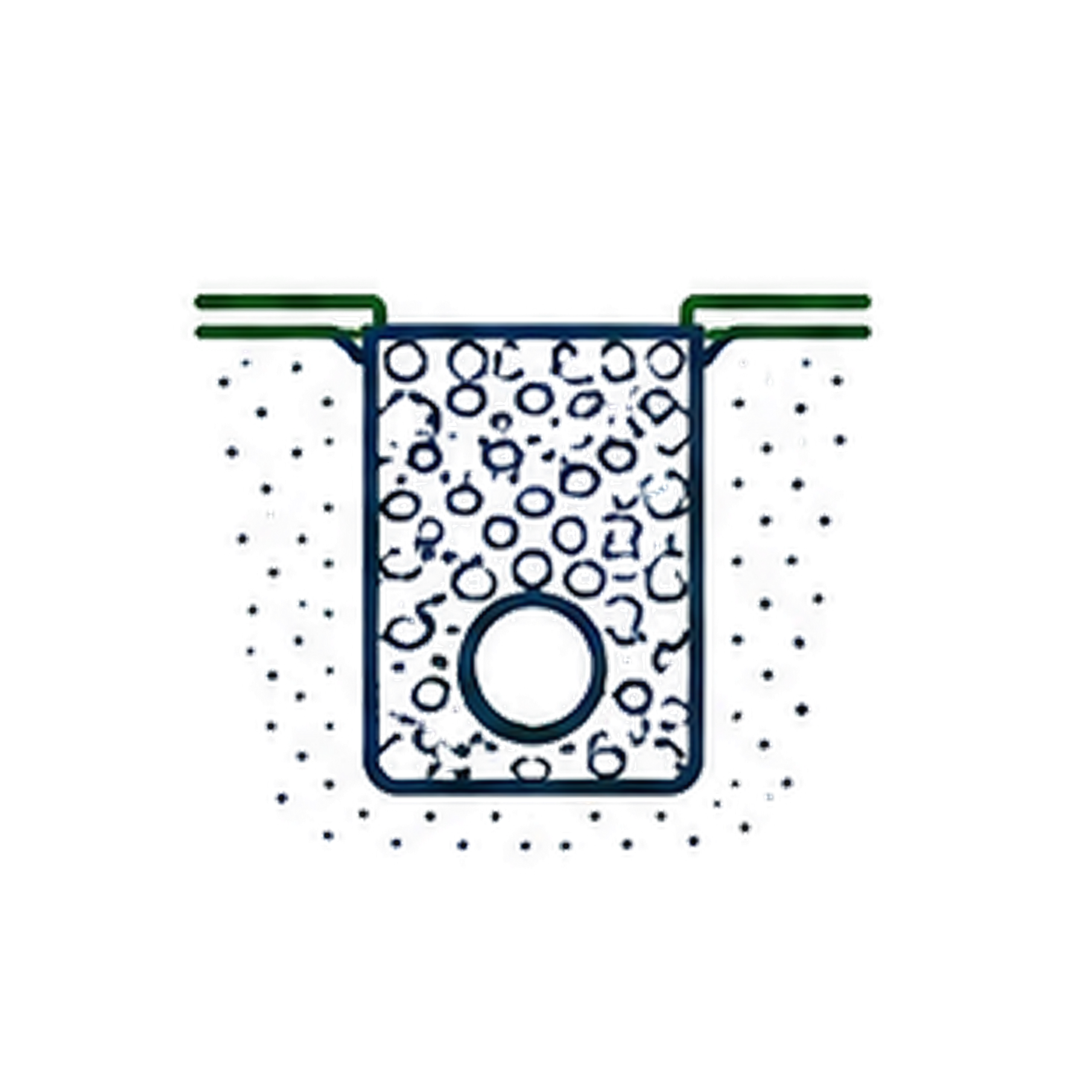
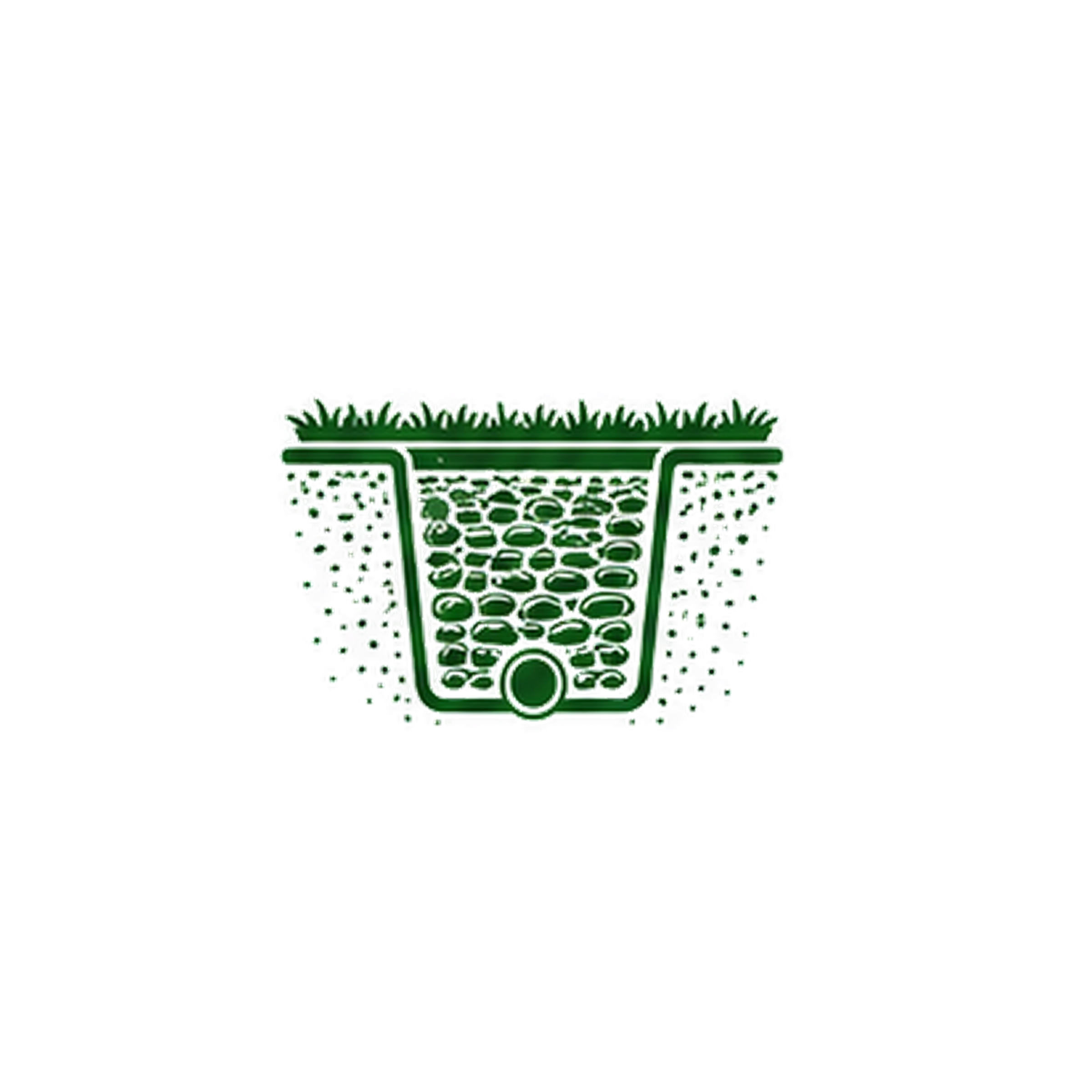
Linear subsurface systems designed for drainage, stormwater storage, and ground infiltration where soil conditions and site geometry allow

Dry Swales
Vegetated conveyance channels with engineered soil media, underdrain components, and plantings that treat stormwater as it moves across a site
What We Install

StormTech SC & DC Chamber Systems
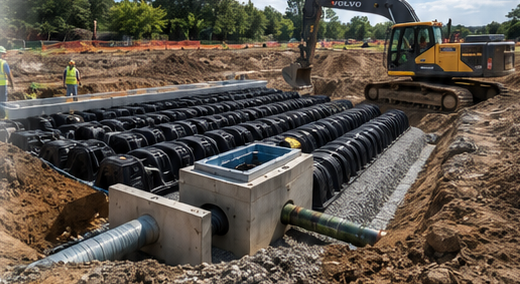
StormTech modular chamber systems provide high-capacity underground stormwater storage through an arch-shaped, interlocking design that maximizes subsurface void space while minimizing excavation volume. Lightweight and efficiently staged, chambers are well-suited for sites where storage demand is high, installation windows are tight or surface constraints limit conventional pipe-based approaches.
StormTech systems are engineered for structural performance across a wide range of soil conditions and loading scenarios and are adaptable to both detention and retention applications depending on site and regulatory requirements.
High void ratio delivers maximum storage capacity per cubic yard of excavation
Engineered to accept traffic and vehicle loads with proper cover depth and design
Fully compatible with filter fabric, stone bedding, and aggregate surround for structural support and water quality integration
Modular, interlocking design allows flexible layout configuration to fit irregular sites and varying storage volume requirements
Widely specified and accepted by Virginia DEQ and local stormwater review agencies across Northern Virginia
Inlet & Outlet Control Structures
Inlet and outlet structures manage how stormwater enters, moves through, and discharges from a detention or conveyance system. Custom precast and cast-in-place structures control system hydraulics, provide maintenance access, and ensure the system performs to design intent and regulatory requirements.
Capital Stormwater Services installs precast concrete manholes, junction boxes, outlet control structures and energy dissipators for stormwater detention, conveyance, and discharge systems. Riser assemblies, orifice plates, trash racks, and related outlet control components are installed, inspected and documented at completion supporting proper system performance and satisfying closeout requirements for engineers, owners and local review agencies.
Precast concrete and cast-in-place structure options to meet site-specific design requirements
Weir walls, orifice plates, and flow control devices for regulated stormwater release
Manholes, access points, and safety grates for long-term inspection and maintenance access
Rain Gardens
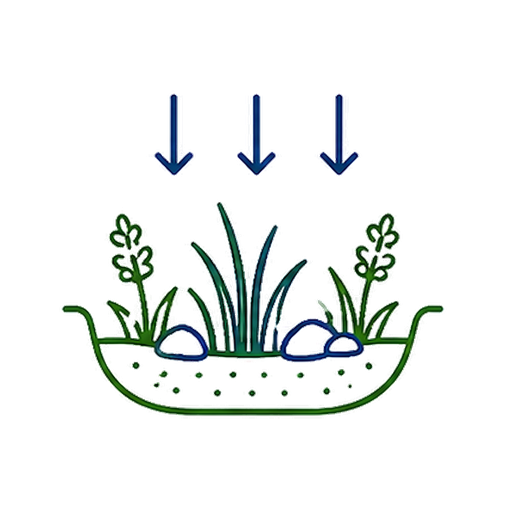
Smaller-scale bioretention systems for residential and commercial stormwater treatment, designed to capture and filter runoff close to the source
Bioretention Cells
Engineered systems with ponding areas, specified soil media, underdrains, overflow structures, and native plantings designed for pollutant removal and volume reduction

Vegetated Filter Strips
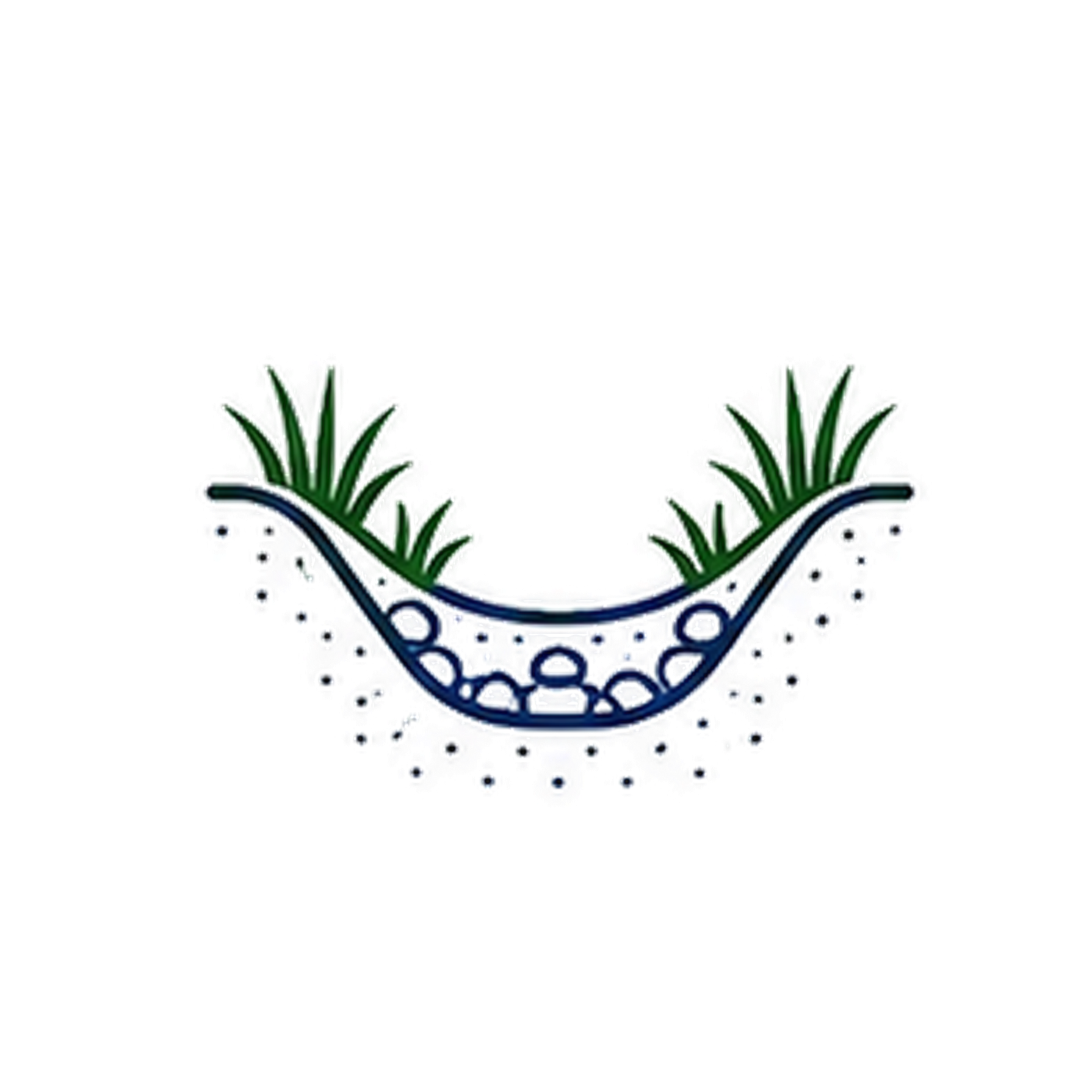
Uniformly graded, vegetated buffers that spread sheet flow, filter sediment, and provide slope-transition treatment between impervious surfaces and receiving areas
Biorentention Maintenance
All bioretention and rain garden installations are performed to PE-stamped plan specifications and engineered to site-specific conditions, in full compliance with local VSMP requirements, municipal ordinances, and Virginia DEQ design standards.
Existing subgrade excavated to plan depth and dimensions; subsoil scarified to promote infiltration where required
Perimeter and base geotextile fabric installed to prevent migration of native soils into engineered media
Underdrain pipe installed at plan grade with perforations, bedding and cleanout access per plan details
Engineered soil media placed and graded in lifts to specified depth. Media is specified by the engineer of record and sourced to specification to optimize filtration, infiltration, and long-term biological performance
Overflow structure installed and set to plan elevation to manage design storm events and protect system integrity during high-flow conditions
Inlet and energy dissipation features installed to prevent erosion and protect media during inflow events
Native vegetation planted to approved planting plan to support filtration performance, root structure development and system establishment
Final grades verified and documented. As-built measurements and photo documentation provided for owner, engineer and local authority records
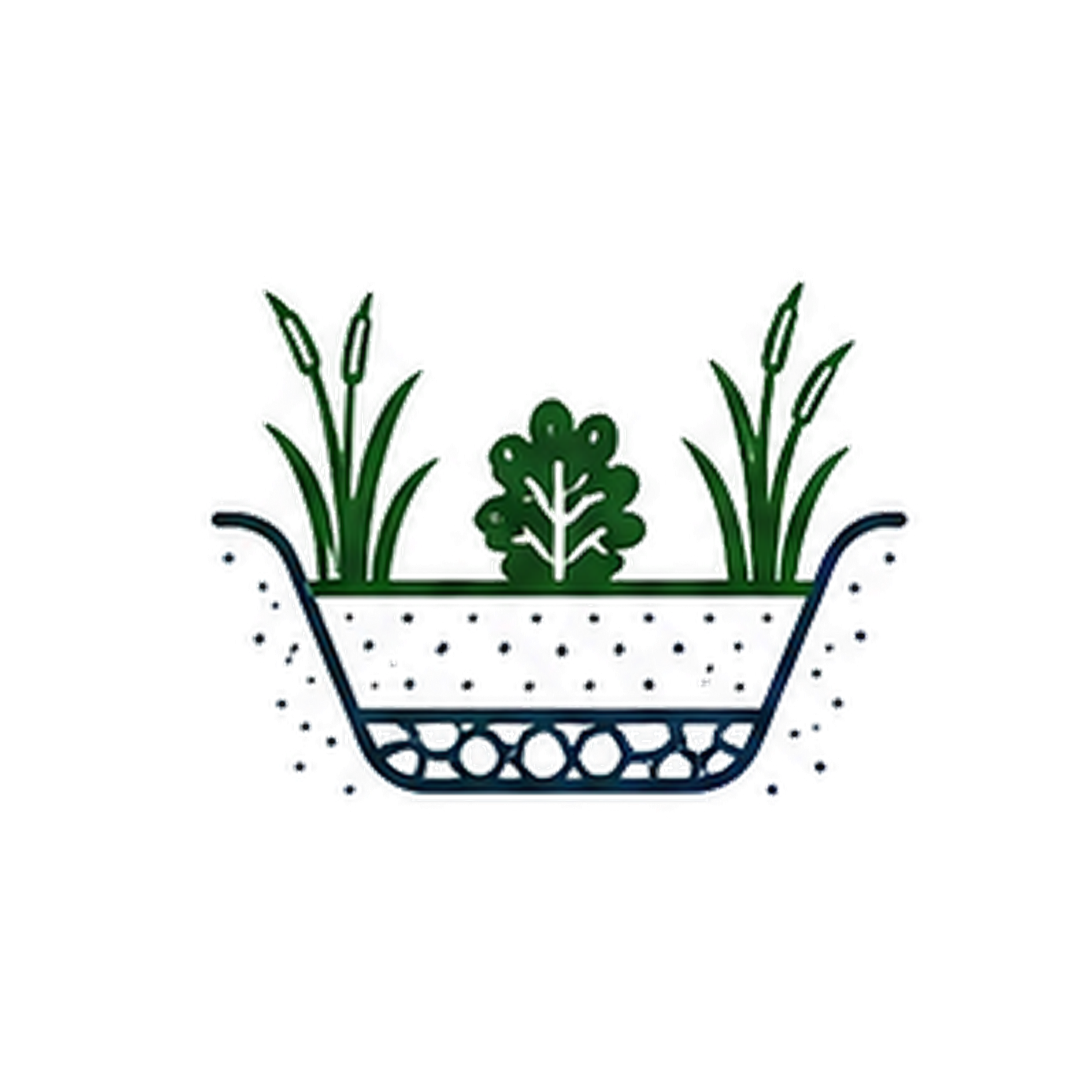

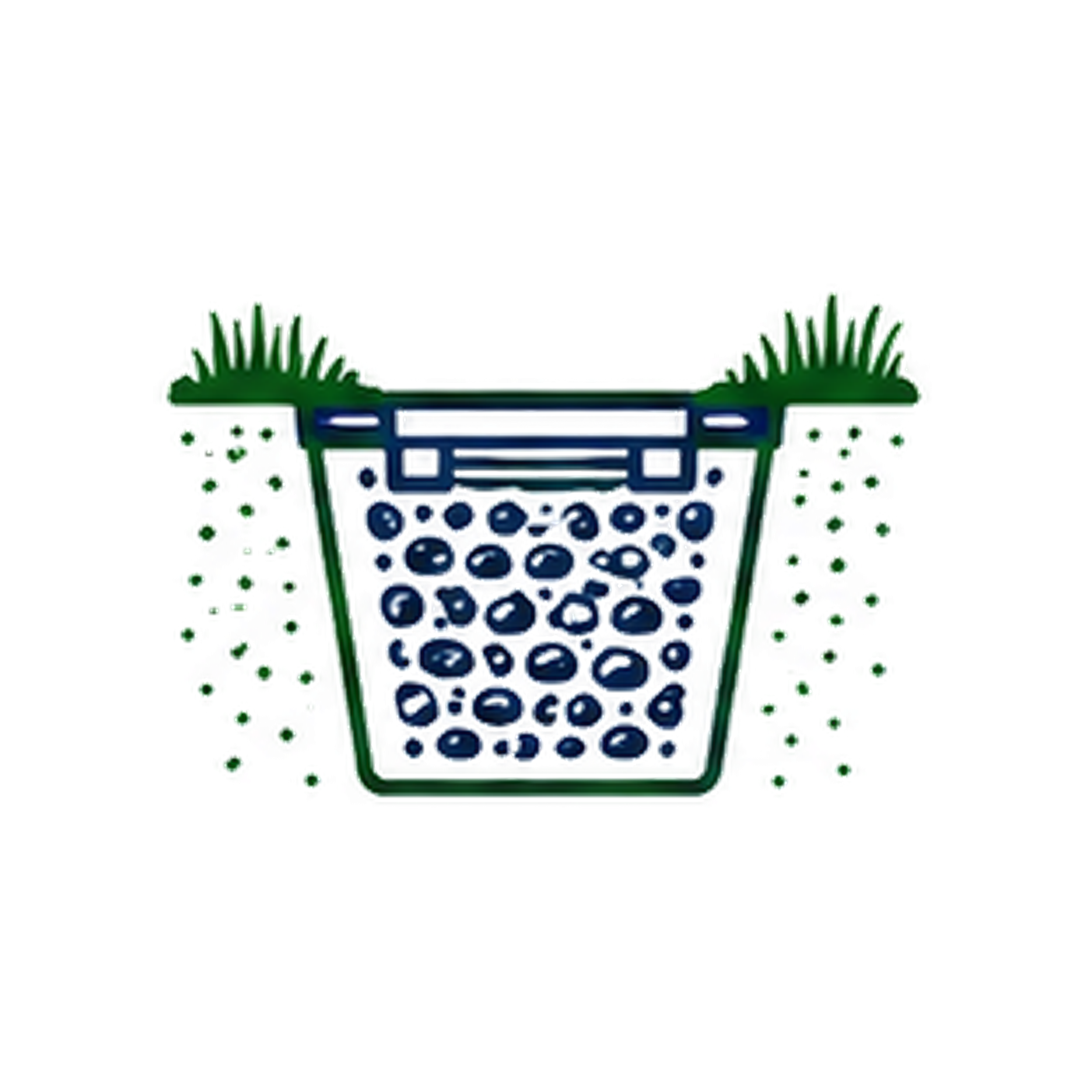


Plan Review
We review approved civil plans, hyrology calculations and manufacturer’s specifications to confirm requirements,

Plant Establishment




MAINTENANCE SERVICES INCLUDE

Sediment Removal



Mulch Replacement


Site Preparation & Excavation
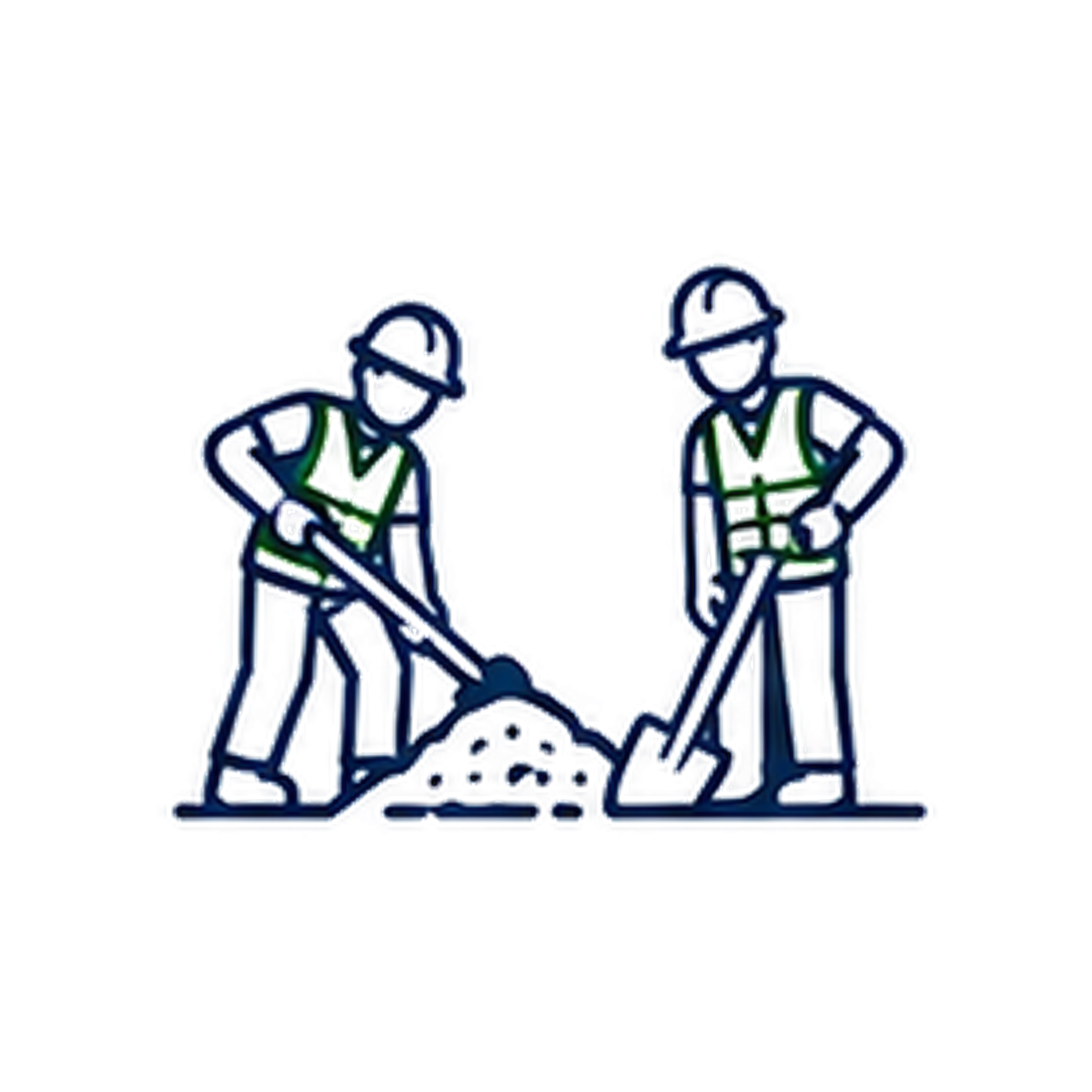
Excavation is completed to the required grades with attention to safety and access.

Invasive Removal



Bedding & Subbase Preparation
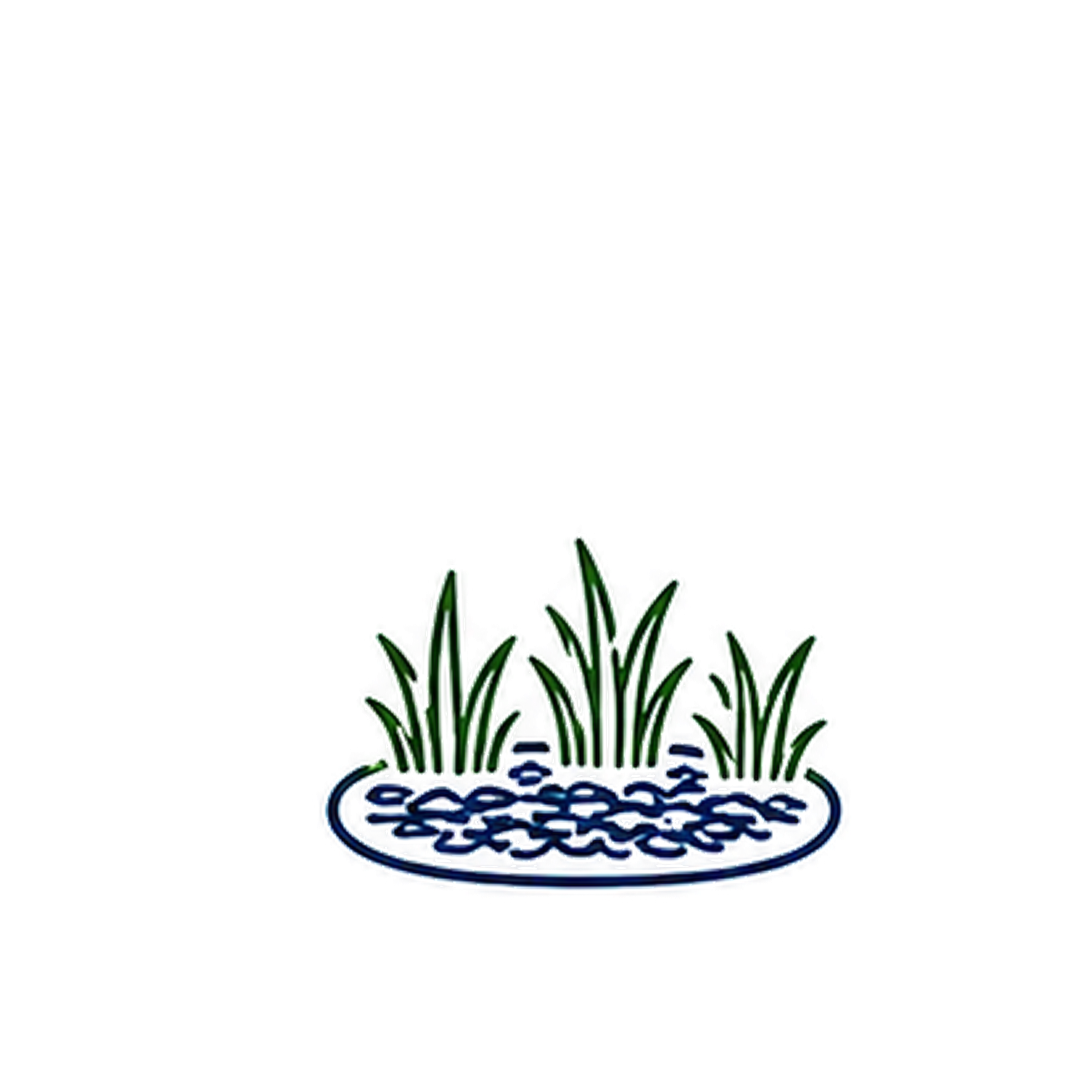
Stone bedding and geotextile are placed to create a stable foundation
Underdrain Inspection and Cleanout


System Placement
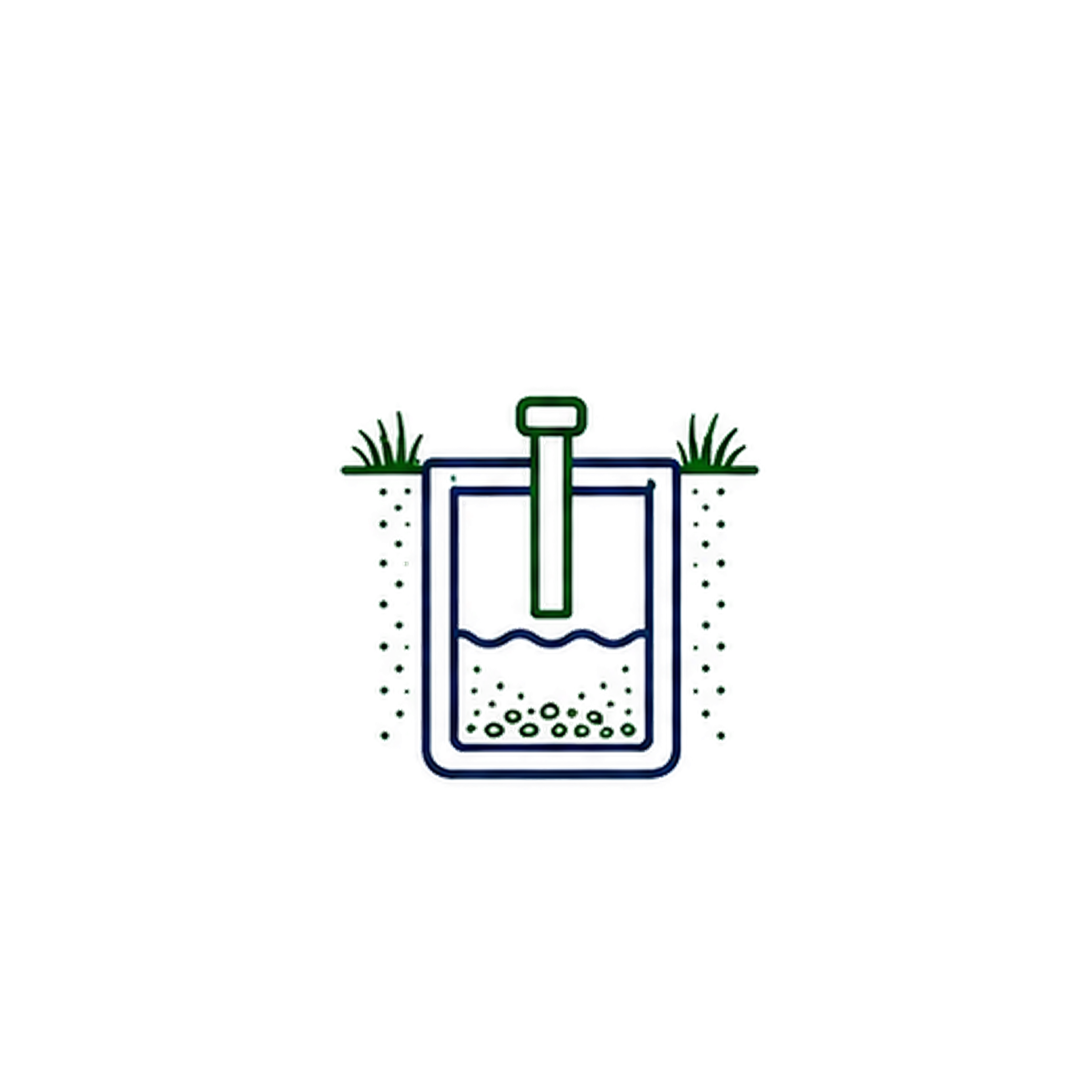
Chambers or pipes are installed to plan with proper alignment and spacing.
Overflow Structure Inspection


Structures & Connections
Inlets, outlets. and flow control structures are connected and sealed per design.

Minor Repairs



Backfill & Compaction
Backfill is placed in lifts and compacted to meet structural and traffic load requirements.
Photo- Documented Inspection Reports



Closeout & Documentation
As-built documentation, photos and inspection reports are provided for compliance.
Ready To Talk About Your Project?
Let’s build smarter, stronger and more sustainable solutions - together.