
STORMWATER 101
Understanding Stormwater What It Is, Why It Matters and
What It Means for Your Property
STORMWATER 101
What Is Stormwater?
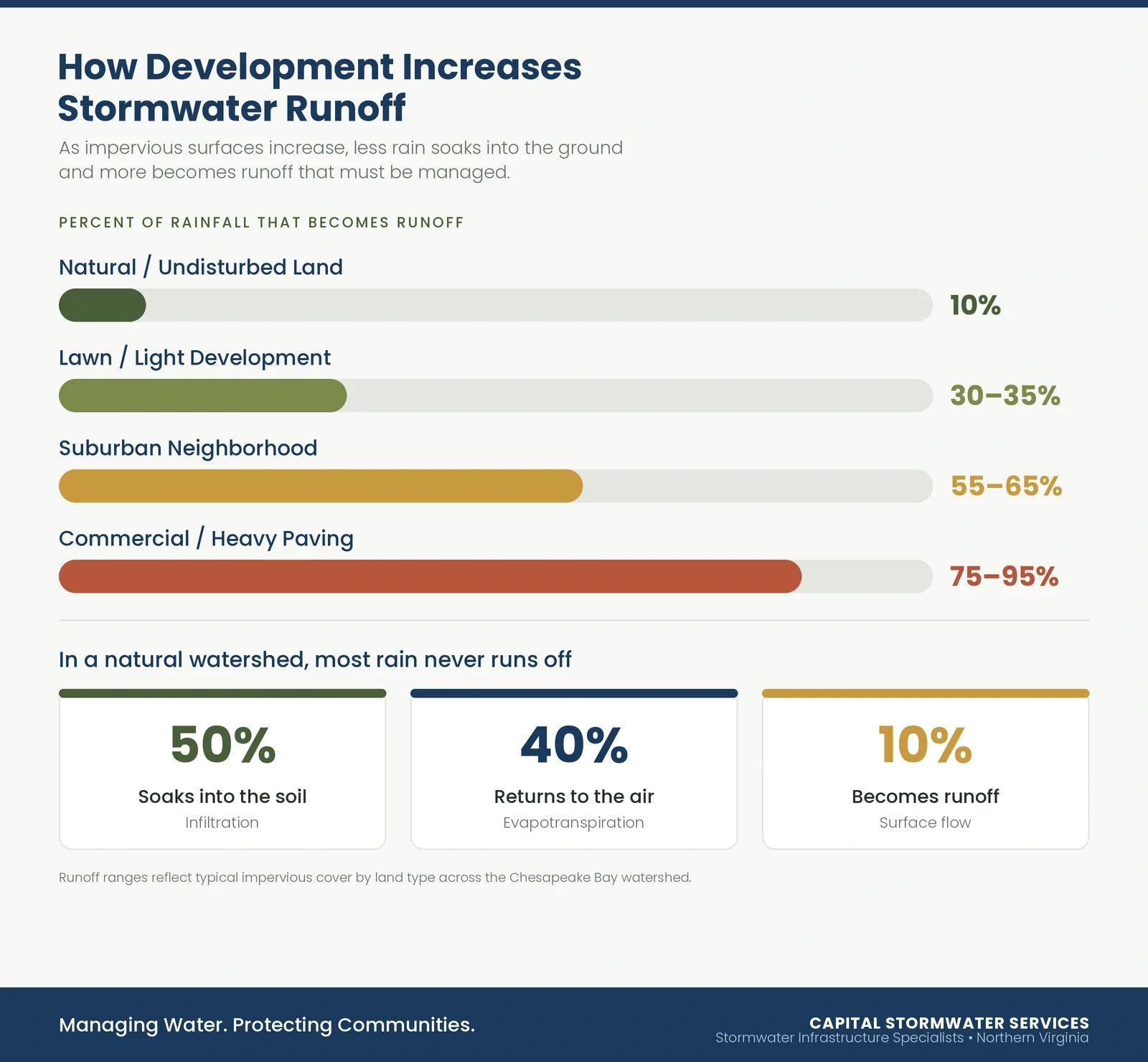
Stormwater is rainfall and snowmelt that flows over land surfaces rather than soaking into the ground. In natural settings forests, meadows, and undisturbed land most precipitation is absorbed by soil, filtered by vegetation, and slowly released into streams and groundwater. Development changes everything.
When land is cleared and covered with impervious surfaces rooftops, parking lots, roads, driveways, and compacted soils rainfall has nowhere to go. Instead of infiltrating gradually, it collects rapidly and flows across hard surfaces, picking up speed, volume, and pollutants before entering storm drains, channels, and ultimately local streams, rivers, and the Chesapeake Bay.
Why Stormwater Is a Problem
Unmanaged stormwater runoff is one of the leading causes of water quality degradation and infrastructure damage across Northern Virginia and the broader Chesapeake Bay watershed. The consequences of uncontrolled runoff include:
Flooding - Rapid runoff from impervious surfaces overwhelms storm drain systems, causes stream bank overflow, and damages downstream properties and infrastructure.
Erosion - High-velocity stormwater scours stream banks, destabilizes slopes, and carries sediment into local waterways, reducing channel capacity and harming aquatic habitat.
Water Quality Degradation - As runoff flows across developed surfaces, it picks up nitrogen, phosphorus, sediment, oil, grease, heavy metals, pesticides, bacteria, and other pollutants carrying them directly into streams and the Chesapeake Bay without treatment.
Infrastructure Damage - Concentrated stormwater flows overwhelm pipes, culverts, and drainage systems not designed for post-development runoff volumes, resulting in costly repairs and premature infrastructure failure.
Groundwater Depletion - When rainfall cannot infiltrate into the ground, groundwater recharge is reduced affecting well yields, stream base flows, and regional water supply.
How Development Changes the Water Cycle
In a natural, undisturbed watershed, as much as 50% of rainfall infiltrates into the ground, 40% is taken up by vegetation through evapotranspiration, and only about 10% becomes surface runoff. As development increases impervious cover, those numbers shift dramatically:
A lawn or lightly developed site may generate 30–35% runoff
A suburban neighborhood with roads and rooftops may generate 55–65% runoff
A commercial site with extensive paving may generate 75–95% runoff
That dramatic shift in runoff volume is why stormwater management is required on new and redeveloped sites and why the infrastructure and practices used to manage it matter so much.
What Is a Stormwater BMP?
Best Management Practice, or BMP, is any structure, practice, or system designed to reduce stormwater runoff volume, control peak flow rates, or improve water quality. BMPs are required on most new development and redevelopment sites in Virginia and are designed by licensed civil engineers to meet specific performance standards set by Virginia DEQ and local stormwater authorities.
BMPs fall into two broad categories:
Structural BMPs
Physical facilities built to manage stormwater. Common examples include:
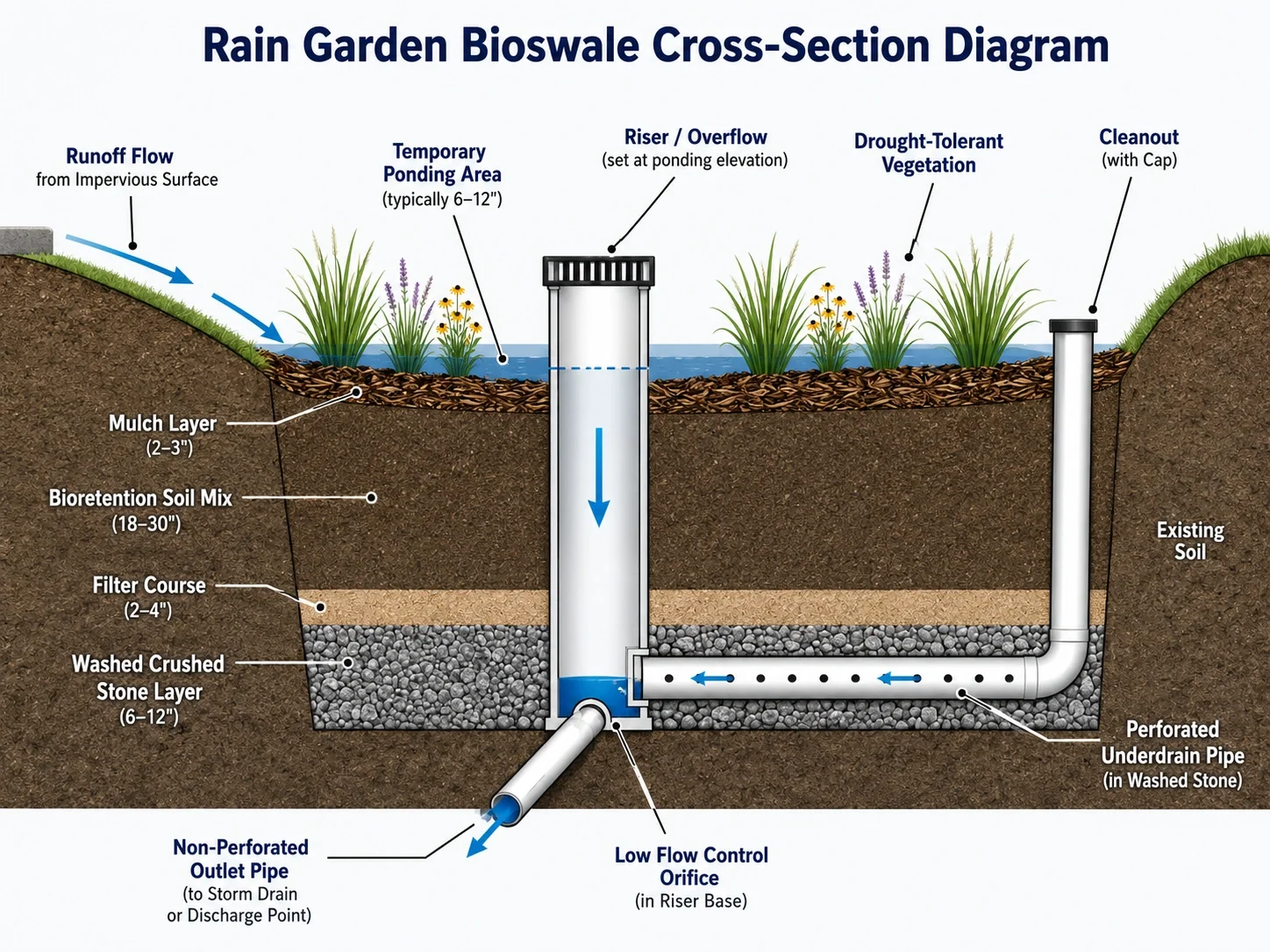
• Bioretention cells and rain gardens
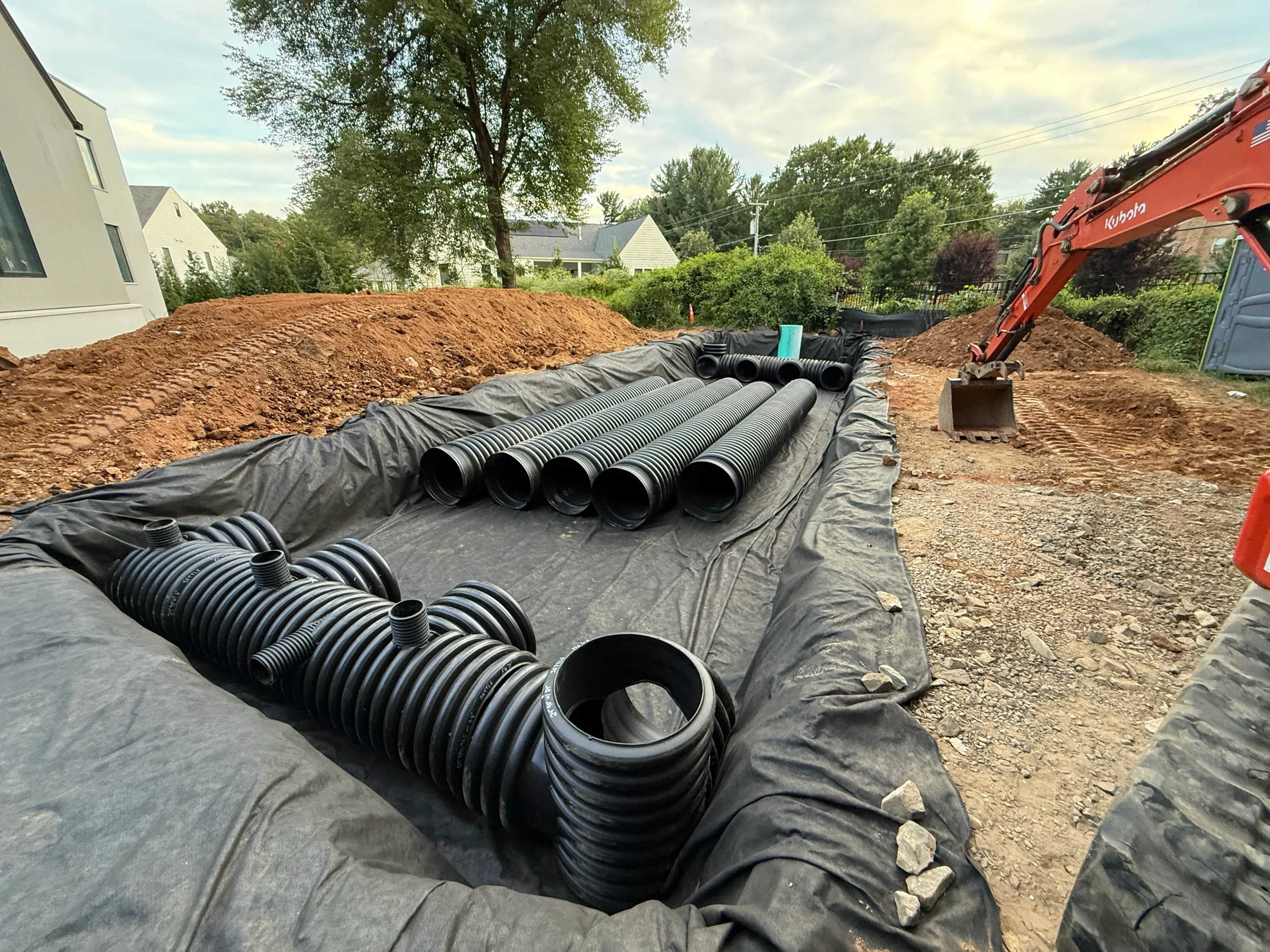
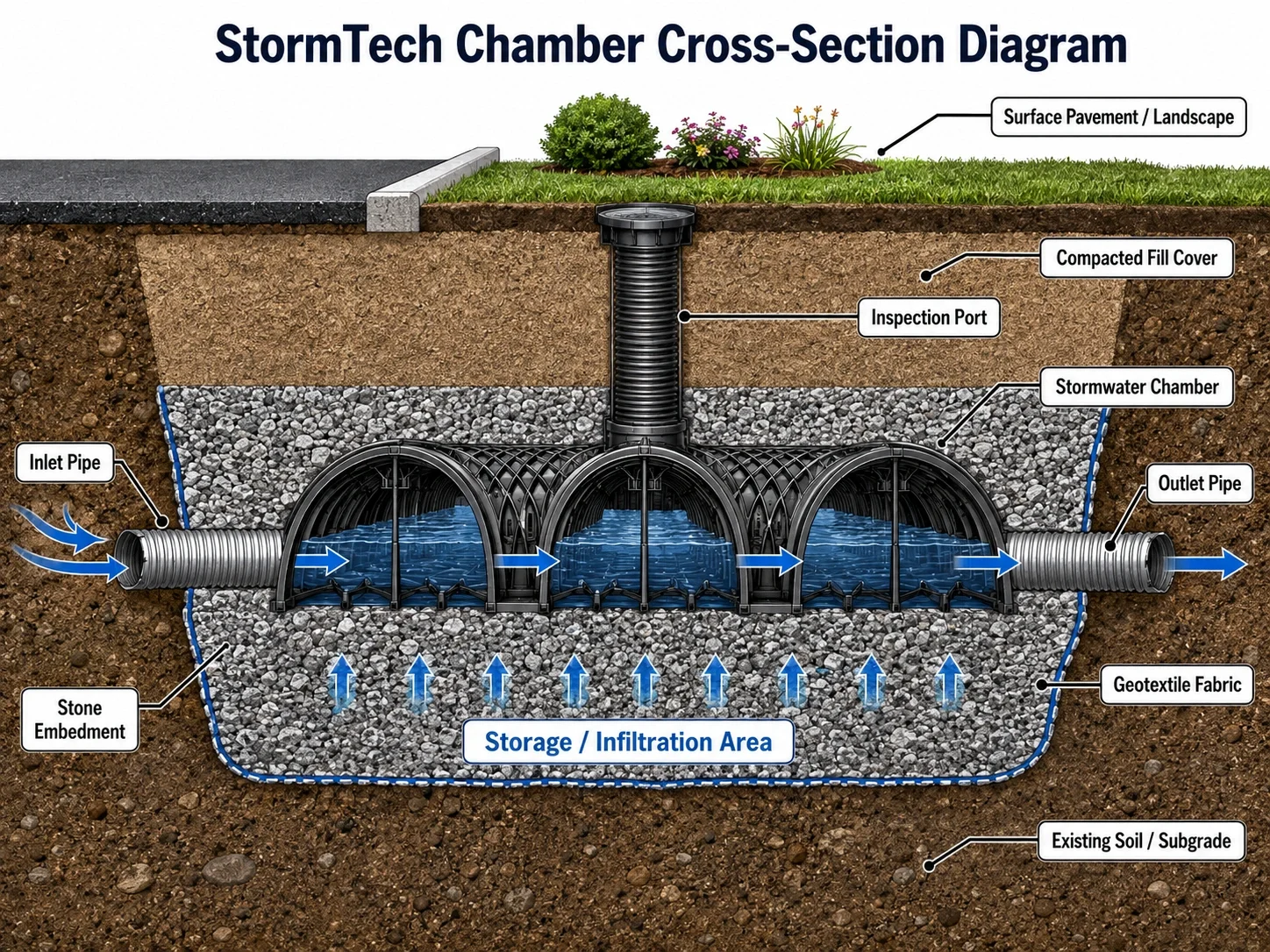
• Underground detention and retention systems
• Wet ponds and dry ponds
• Infiltration trenches and dry swales
• Vegetated filter strips
• Proprietary treatment devices
Non-Structural BMPs
Practices and land management approaches that reduce runoff at the source such as minimizing impervious cover, preserving natural vegetation, and managing construction site erosion and sediment controls.
What Is the Difference Between Detention and Retention?
These terms are often used interchangeably but have distinct meanings in stormwater management:
Detention
The temporary capture and storage of stormwater runoff, which is then released at a controlled, pre-approved rate. Detention systems including underground pipe systems, chamber systems, and dry ponds reduce peak flow rates and protect downstream properties from flooding. They do not permanently hold water.
Retention
The permanent storage of a pool of water, with additional capacity above the permanent pool available for storm events. Wet ponds are the most common retention facility. Retention systems provide water quality benefits in addition to quantity control, as the permanent pool allows sediment to settle and biological processes to reduce nutrient loads over time.
What Is the Chesapeake Bay Connection?
Northern Virginia sits within the Chesapeake Bay watershed one of the largest and most ecologically significant estuaries in the United States. Every stream, creek, and river in the region eventually drains to the Bay, making local stormwater management a critical component of Bay restoration.
Nitrogen, phosphorus, and sediment the primary pollutants carried by stormwater runoff are also the primary drivers of Bay water quality degradation. Excess nutrients fuel algae blooms that deplete oxygen, create dead zones, and harm aquatic life including oysters, crabs, and fish. Sediment clouds the water and smothers underwater grasses that provide critical habitat.
Virginia's stormwater regulations including the Virginia Stormwater Management Program (VSMP) and MS4 permit requirements are directly tied to the state's obligations under the Chesapeake Bay Total Maximum Daily Load (TMDL), a federally established pollution reduction target that requires measurable improvements in the quality of water reaching the Bay. Every properly designed, correctly installed, and well-maintained stormwater BMP in Northern Virginia contributes to Bay restoration one project at a time.
What Are MS4 Permits?
MS4 stands for Municipal Separate Storm Sewer System. Northern Virginia localities including Fairfax, Loudoun, Prince William, Arlington, Fauquier, and Culpeper counties operate storm drain systems that collect and discharge stormwater runoff. These systems are regulated under MS4 permits issued by Virginia DEQ, which require localities to actively manage stormwater quality within their jurisdictions.
As part of their MS4 permit obligations, counties are required to:
• Inspect privately maintained BMP facilities within their jurisdiction
• Enforce recorded BMP maintenance agreements
• Track and report pollutant load reductions achieved through stormwater management
• Educate the public about stormwater impacts and stewardship
This is why property owners with stormwater facilities on their land receive inspection notices, maintenance requirement letters, and compliance correspondence from their county it is the locality fulfilling its own regulatory obligations under its MS4 permit.
What Is a BMP Maintenance Agreement?
When a stormwater BMP is constructed on private property as part of a development approval, a BMP Maintenance Agreement is recorded against the property in the land records. This legal document:
• Identifies the BMP facility and its location on the property
• Establishes the owner's ongoing obligation to inspect, maintain, and repair the facility
• Requires documentation and reporting of maintenance activities
• Gives the locality the right to inspect the facility and, in some cases, perform maintenance at the owner's expense if the owner fails to do so
• Runs with the property meaning it transfers to new owners at closing
BMP maintenance agreements do not expire. They remain in force for the life of the facility and are enforceable by the local stormwater authority. Buyers and sellers of commercial, residential, and HOA-managed properties should review recorded maintenance agreements as part of any real estate transaction involving developed land.
Why Proper Installation Matters
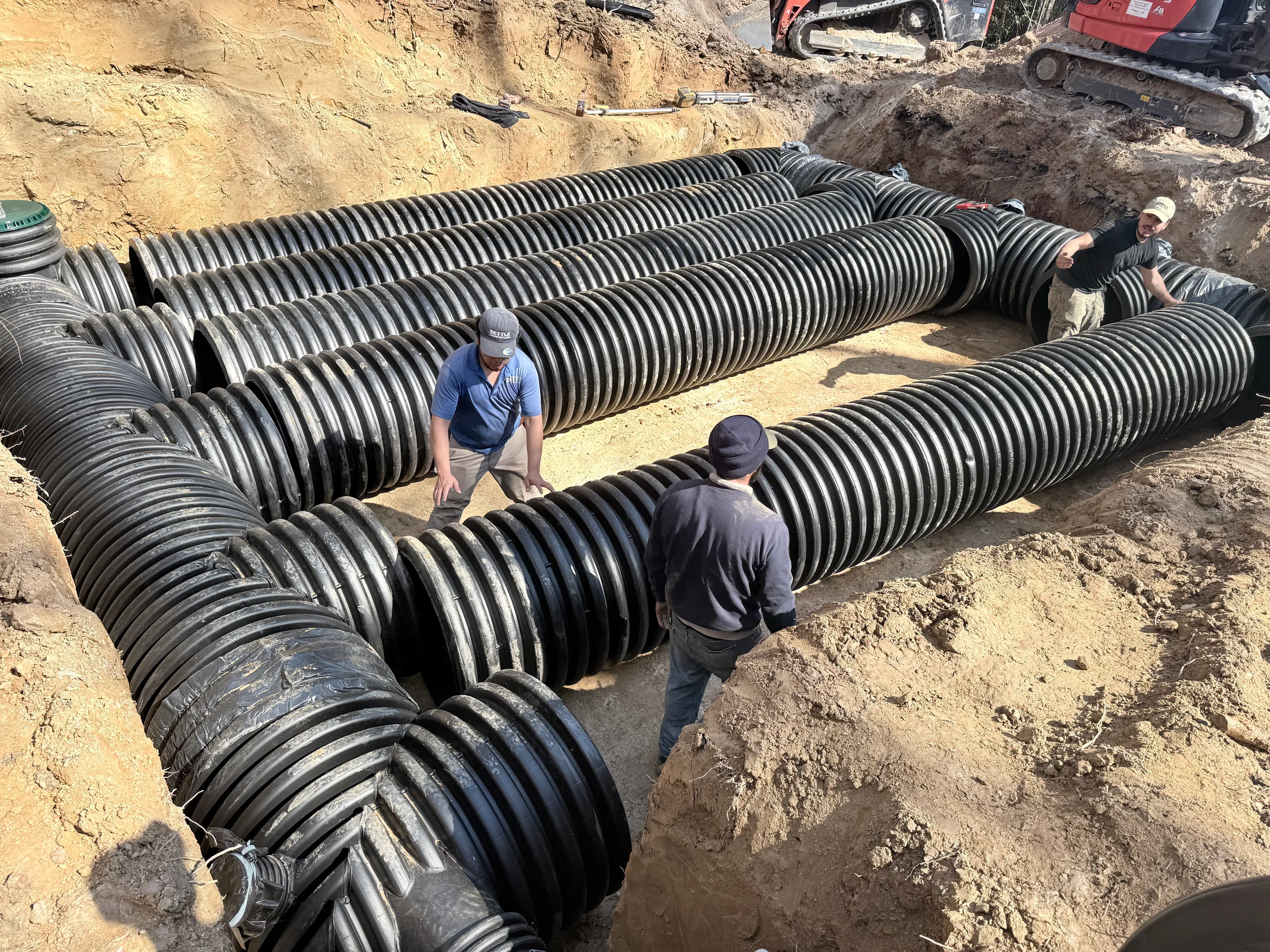
A stormwater system is only as good as its installation. Underground detention systems, bioretention cells, outlet control structures, and other BMPs are designed by engineers to specific dimensions, grades, media specifications, and performance criteria. When installation deviates from approved plans incorrect bedding, improper compaction, wrong media, misaligned outlet structures the system fails to perform as designed.
The consequences of poor installation are not always immediately visible. An underground detention system with inadequate compaction may perform adequately for years before settling causes pipe misalignment or structural failure. A bioretention cell with incorrect media may drain too quickly or too slowly, failing to meet water quality performance standards during the very inspections designed to verify compliance.
Proper installation, documented with as-built measurements and photo records, is the foundation of a stormwater system that performs and complies for decades.
Why Ongoing Maintenance Is Not Optional
Stormwater facilities are active systems that respond to every rain event. Over time, sediment accumulates, vegetation changes, outlet components corrode, and embankments experience erosion and settlement. Without regular inspection and maintenance:
• Storage capacity decreases as sediment fills forebays, vaults, and detention areas
• Infiltration rates decline as bioretention media surfaces become clogged
• Outlet structures become blocked, corroded, or structurally compromised
• Embankments and slopes erode, creating instability and compliance findings
• Vegetation fails or is overtaken by invasives, reducing treatment effectiveness
The result is a facility that no longer performs as designed and an owner who is out of compliance with a recorded maintenance agreement, subject to county enforcement, and facing repair costs that far exceed what routine maintenance would have prevented.
Who Is Responsible for Stormwater on Private Property?
In Virginia, stormwater facilities constructed on private property as part of a development approval are the responsibility of the property owner. This includes:
• Conducting regular inspections on the schedule required by the maintenance agreement and local stormwater authority
• Performing all required maintenance to keep the facility functioning as designed
• Maintaining documentation of all inspections, maintenance activities, and repairs
• Responding to county inspection findings and correcting identified deficiencies within required timeframes
• Ensuring maintenance obligations are disclosed and transferred at the time of property sale
These responsibilities do not diminish over time and do not transfer to the county or state. They are the ongoing obligation of whoever owns the property.
How Capital Stormwater Services Can Help
Capital Stormwater Services is a dedicated stormwater infrastructure contractor serving Northern Virginia's six-county market Fairfax, Loudoun, Prince William, Arlington, Fauquier, and Culpeper. We specialize in the installation and long-term maintenance of the stormwater systems and BMPs that keep communities, developments, and commercial properties compliant, protected, and performing.
Our services include:
• Underground detention system installation HDPE pipe systems and chamber systems
• BMP installation bioretention cells, rain gardens, infiltration trenches, dry swales, and vegetated filter strips
• Inlet and outlet structure installation and repair
• Sediment removal and facility cleanout
• Embankment and vegetative maintenance
• Annual BMP inspections and compliance reporting
• Emergency stormwater facility repairs
Whether you are a general contractor, civil engineer, homebuilder, developer, HOA, property manager, or commercial property owner, Capital Stormwater Services has the specialized knowledge, trained crew, and in-house equipment to manage your stormwater obligations from installation through long-term compliance.
Managing Water. Protecting Communities.
Have questions about your stormwater facility or project?
Contact Capital Stormwater Services for a free consultation.